1️⃣ STEERING INPUT Wheel, column and shaft begin the command
↓
2️⃣ STEERING GEAR / ASSIST Gear and assist system convert input into steering force
↓
3️⃣ LINKAGE / KINGPINS / KNUCKLES Transfer movement and pivot the steer wheels
↓
4️⃣ SUSPENSION / AXLE LOCATION Controls chassis support, ride height and axle position
↓
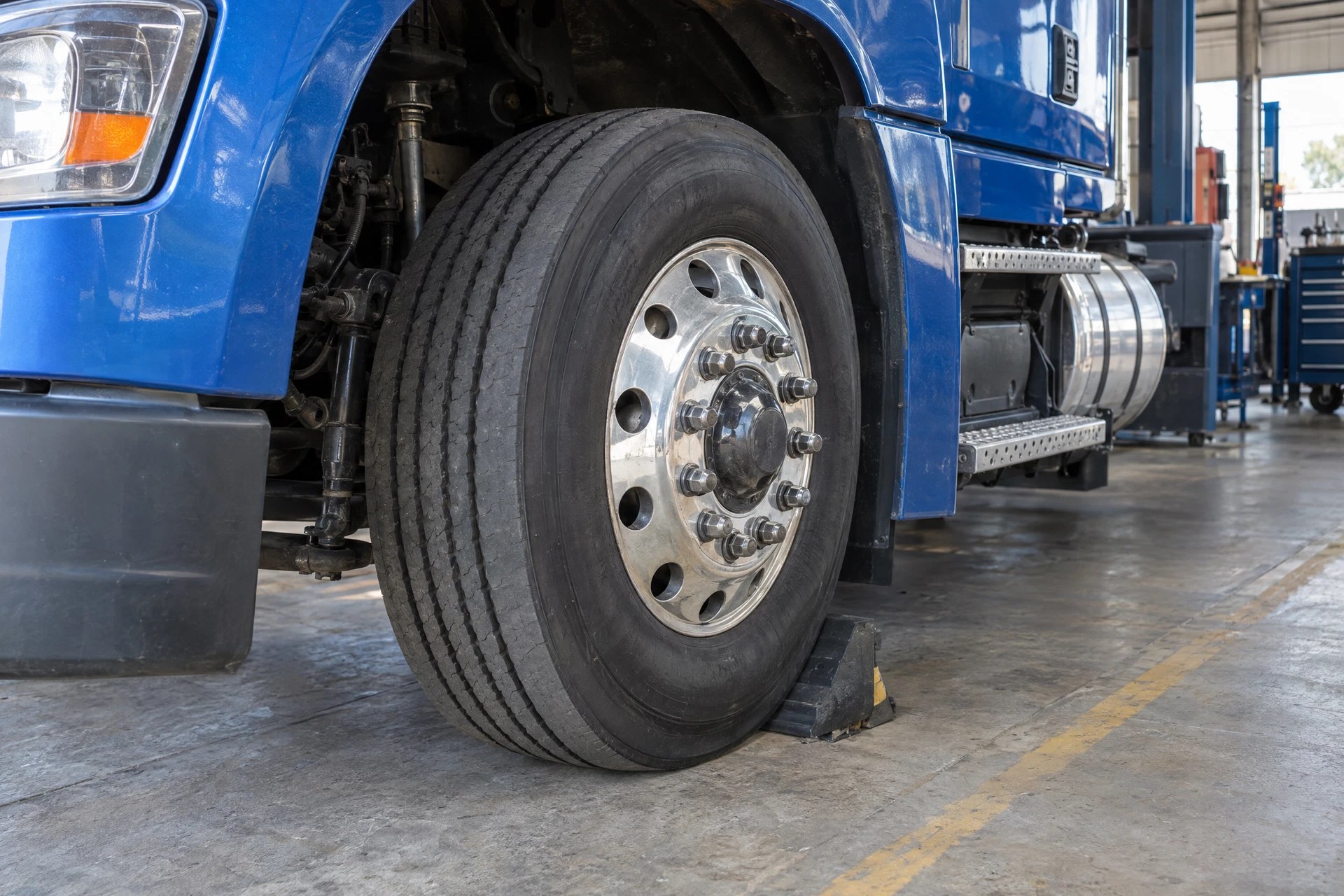
5️⃣ WHEEL END / WHEEL / TIRE Where looseness, alignment and wear often leave visible evidence
👇 Follow the complaint
↔️ PULL: Determine whether it pulls constantly, during braking, under acceleration or mainly on certain road crowns. Check tires, brake drag and mechanical condition before alignment.
🛣️ WANDER / LOOSE: Follow free play from steering wheel to road wheel one connection at a time. Several small loose points can stack into a large road complaint.
💪 HARD STEERING: Separate loss of hydraulic/electric assist as equipped from mechanical binding in linkage, kingpins or joints.
〰️ SHAKE: Record exact road speed and condition. Start with steer tires/wheels and wheel ends, then steering/suspension looseness. Continue into driveline diagnosis if the vibration is not isolated to the steer axle.
🛞 UNEVEN WEAR: Treat the pattern as evidence. Pressure, wheel-end movement, steering looseness, suspension, alignment, balance and service conditions can overlap.
🔨 CLUNK: Identify what movement causes the noise—bump, brake, steering, acceleration or chassis twist—then look for witness marks and movement in the corresponding parts.
🔩 KINGPIN PLAY: Movement at the tire is not enough. Separate kingpin/knuckle movement from wheel-bearing and linkage movement using the axle manufacturer’s procedure.
🧠 Alignment comes last
1️⃣ Verify tires, inflation and wheel condition.
2️⃣ Find steering, kingpin or wheel-end looseness and mechanical binding.
3️⃣ Verify suspension condition, axle location and ride height where applicable.
4️⃣ Measure alignment only after the components controlling those measurements are mechanically sound.
⚠️ Steering and suspension are safety-critical. Properly secure and support the vehicle and follow current manufacturer inspection, measurement, torque and adjustment procedures. Do not return a vehicle to service with unresolved steering looseness, binding or unsafe suspension damage.
More symptoms in this system
Use these focused checks alongside the system explanation above. Confirm the exact vehicle configuration and current manufacturer procedures before testing or repair.
🔨 FRONT-END CLUNK
A clunk is easiest to find when you first identify what movement makes it happen.
1️⃣ RECREATE THE EVENT: Bump, brake application, steering input, acceleration, driveway twist or only one wheel hitting a bump?
2️⃣ VISUAL EVIDENCE: Look for shiny witness marks, shifted parts, loose/missing hardware, damaged bushings, cracked components and abnormal contact.
3️⃣ STEERING LINKAGE: Inspect steering shaft/linkage, drag link, tie rod, steering arms and related joints using approved free-play procedures.
4️⃣ SUSPENSION: Inspect springs, hangers, shackles/bushings, U-bolts/retention, shocks and axle-locating components as equipped.
5️⃣ KINGPIN / WHEEL END: Separate kingpin/knuckle movement from wheel-bearing movement using the correct unloaded inspection method.
6️⃣ VERIFY: Repair the proven source, torque/adjust by specification and recreate the original event.
WHAT MAKES IT CLUNK? → WITNESS MARKS → STEERING → SUSPENSION → KINGPIN / WHEEL END → PROVE → VERIFY.
⚠️ Never crawl under an unsupported vehicle. Steering and suspension fasteners are safety-critical; use current OEM torque and inspection specifications.
💪 HARD STEERING
Separate loss of steering assist from mechanical binding before condemning the steering gear.
1️⃣ WHEN IS IT HARD? Both directions or one? Idle only? Hot only? At a stop or while moving? Sudden or gradual?
2️⃣ ASSIST SYSTEM: Inspect fluid level/condition and leaks where applicable, drive system, hoses and obvious restrictions. Follow OEM pressure/flow tests before replacing a pump or gear.
3️⃣ MECHANICAL BINDING: Inspect steering linkage, kingpins/knuckles and related joints using approved unloaded/isolated tests where required.
4️⃣ STEERING GEAR: Diagnose internal gear concerns only after input shaft, assist supply and downstream linkage have been separated from the complaint.
5️⃣ TIRES / LOAD: Incorrect tire pressure, axle loading or application conditions can change steering effort and should be checked against vehicle requirements.
6️⃣ VERIFY: Confirm normal steering effort in both directions at the condition that originally produced the complaint.
⚠️ Steering systems can contain high hydraulic pressure. Follow manufacturer pressure-test, support and safety procedures.
🔩 SUSPECTED KINGPIN PLAY
Movement at a steer wheel does not automatically mean kingpins. First identify exactly which joint is moving.
1️⃣ SUPPORT CORRECTLY: Follow axle/vehicle manufacturer procedures for safely unloading and checking the steer axle components.
2️⃣ WATCH THE JOINT: Observe movement at the knuckle/kingpin area while the approved inspection force is applied. Do not diagnose only by how the tire feels in your hands.
3️⃣ SEPARATE WHEEL BEARING: Hub/bearing movement can imitate kingpin looseness. Use the manufacturer’s method to isolate the source.
4️⃣ CHECK LINKAGE: Tie-rod ends and other steering joints can add movement and may coexist with kingpin wear.
5️⃣ MEASURE AGAINST SPEC: Use the exact axle manufacturer’s inspection limits and measurement procedure. Do not use a generic universal play limit.
6️⃣ AFTER REPAIR: Verify steering movement, lubrication/service requirements and alignment as applicable.
SUPPORT SAFELY → WATCH ACTUAL JOINT → SEPARATE BEARING → CHECK LINKAGE → OEM LIMIT → REPAIR → VERIFY.
⚠️ Kingpin and steer-axle service is safety-critical. Use the axle manufacturer’s current specifications, tools and procedures.
↔️ STEERING WANDERS / FEELS LOOSE
Wandering is often a stack-up of small movements. Follow free play from the steering wheel all the way to the road wheels.
1️⃣ DEFINE IT: Constant wander, road-crown sensitivity, crosswind only, loaded/unloaded, or after hitting bumps?
2️⃣ TIRES FIRST: Verify steer-tire pressure, condition, size/match and obvious irregular wear before adjusting steering parts.
3️⃣ TRACE FREE PLAY: With approved inspection methods, watch column/shaft, steering gear output, drag link, steering arms, tie rod, kingpins and wheel ends. Find where input stops becoming wheel movement.
4️⃣ AXLE LOCATION: Inspect springs, bushings, torque rods and other axle-locating parts as equipped. The axle must stay where alignment measurements assume it is.
5️⃣ RIDE HEIGHT / ALIGNMENT: Verify mechanical condition and ride height before using alignment to compensate for worn or loose components.
6️⃣ VERIFY: Road-test safely under the original load/speed/road condition.
⚠️ Steering looseness is safety-critical. Do not return the truck to service until unsafe movement is corrected to manufacturer limits.
🛞 UNEVEN STEER-TIRE WEAR
The wear pattern is evidence, not a diagnosis. Several faults can create similar-looking wear.
1️⃣ RECORD THE PATTERN: Inside/outside shoulder, cupping/scalloping, feathering, one tire or both, and mileage since installation/rotation.
2️⃣ PRESSURE / TIRE CONDITION: Verify inflation against the vehicle/tire application and inspect for mismatch, damage and abnormal casing/tread condition.
3️⃣ WHEEL END: Check bearing/end-play condition and wheel/rim condition using manufacturer procedures. Movement at the hub can change what the tire does on the road.
4️⃣ STEERING / SUSPENSION: Inspect tie-rod ends, kingpins, steering linkage, shocks and axle-locating components for looseness or failed control.
5️⃣ RIDE HEIGHT + ALIGNMENT: Verify ride height/axle position as applicable, then measure alignment only after mechanical condition is sound.
6️⃣ VERIFY: Correct the cause, document measurements and monitor the replacement/remaining tire wear pattern over service.